Total Pageviews

Thursday, 7 November 2013

Pickers


American Pickers Mike Wolfe and Frank Fritz
Canadian Pickers Sheldon Smithens and Scott Cozens
 
There Must Be Another Way To Make A Living?

Back when I was in my mid-thirties I thought about changing my working career from sales to something else. It wasn’t that I was totally dissatisfied with being a salesman, it paid quite well. It was more about trying something new. After a while, flogging the same type of product year after year can get pretty repetitive. The field I was in, selling photo copiers, was kind of a one and done type of deal. There were no long term relationships to be built with customers in most cases and there was pressure at the beginning of each new month to find fresh sales opportunities.
The company I was working for was the best in the business and for a few years I was one of their most proficient producers. Eventually I quit and worked as a sales manager for a competitor. That was a big mistake and a waste of time. What I really needed to do was start my own business and that is exactly what I did at the age of 38. I sold the business clients list about 20 years later and semi-retired. The business itself is still in operation but on a much smaller scale. It consumes about 2 days a month of my time if that.
But there was a time before I started my own business that I thought about other endeavours.
I thought it would be great to own a B & B, the simple life away from the hustle and bustle of the city, meeting people from around the world, introducing them to the beauty of British Columbia’s great outdoors. Perhaps a place close to the ocean on Vancouver Island I thought. My wife at the time thought it was a terrible idea right from the start. She was a very social kind of person and was not keen on the idea of living somewhere isolated away from her friends and family. When we were first married we lived on Bowen Island off of West Vancouver and although the house was neat and had an amazing waterfront view my ex couldn’t wait to move back to Vancouver.
The B & B idea wasn’t going to fly. I hadn’t really thought it all out. When I did I had to agree that it was a bad idea. We had stayed at several B & B in the past and I had to think long and hard to see if I could recall any B & B owner who seemed like a happy sort. I couldn’t. They mostly seemed kind of anxious. Perhaps because of all the idle time in the off season, the putting up with some obnoxious people they didn’t want in their home, being at the beck and call of strangers, the no shows, guests walking off with this and that, and probably more than anything else the financial strain. On top of all that dumping soiled sheets in the washer after the guest’s romantic weekend or whatever you want to call it seems like a nasty chore to have to do.
Another idea I had was opening a restaurant. I had an opportunity to pick up a lease on a closed restaurant on Bowen Island right near the ferry landing. This was a no go right from the start as my ex wanted to get off of the island. Still the idea of my own restaurant floated around in my head. I thought a 40 seat place would be perfect, a seafood place. I even came up with a name for the place…Thish Ish Fish, a cute name but a stupid name. In retrospect the name kind of sounded like I was mocking First Nations people.
I thought I could open a restaurant for about 35 grand. Although this was more than 30 years ago I was probably out by at least 50 grand in my estimate. I liked seafood a lot but had limited experience at cooking the stuff myself which meant I would have to hire a cook. Seafood is expensive and it goes bad very fast. Running a small restaurant means that you have to be there pretty well all the time it is open. There is always somebody with sticky fingers as far as cash is concerned. All things being considered owning a small restaurant is kind of like buying a job but with more responsibilities than the profits warrant.
Oddly enough the small business I still own supplies about 350-400 restaurants and pubs on Vancouver Island. In the past few years I have seen a number of these restaurants and bars go out of business for a variety of reasons including one suspicious fire. The number one reason for failure is probably location. Not having a personality or some charm doesn’t help either. Some owners have no sense of self promotion. And of course there are those who treat the cash till as their own personal piggy bank.
In the past few years there have been a number of reality TV programs that have turned up that show people making a buck in a different way than many of us are used to. I’m not talking about the pest control guys, the alligator hunters, the wild hog chasers, the tuna fishermen, or the Alaska crab fishermen (I get a chill down my spine watching the latter. It makes me want some hot soup). 
I never thought it would be fun to be one of those storage locker people. Going through what often seems to be someone else’s garbage looking for some gem just doesn’t seem appealing. Bidding against people who might want to see you rubbed out also doesn’t seem to be very enjoyable. Standing around a musty second hand store with a load of junk seems like a crappy way to spend one’s days. And then of course you have to drag all the worthless stuff off to the dump, often at a loss. It is a job for some people but not for me.
Picking
I’ve been watching American Pickers and Canadian Pickers from the first time they turned up on the tube. If I was 25 years younger I might consider making a living picking. I`ve always loved travelling and the open road and I am always starting conversations with complete strangers so I am not shy. Plus I have all those years of experience working as a salesman. I have a genuine interest in most old stuff (no tea cup sets or life like dolls). Why not give it a go?
Well there are a number of reasons that I wouldn’t consider picking. At this stage in life I like the freedom of choosing a variety of things to spend my time on. Picking would just take up too much of that time and most likely it would become an obsession that crowded other pastimes out. I don’t think I would be that fussy about carrying heavy objects. Digging through old stuff covered in animal crap would be cringe worthy and getting punctured by an unseen rusty nail must happen from time to time. And just where would I keep all of my findings? I would have to rent a storage locker. And last but not least I would need a partner with the same interests and how would that work out?
I do have a bit of boldness as far as getting into places. I’ve had tours by the owners of 3 different houses I once lived in. The summer before last I got invited into an old house on Vancouver Island that had a large boat hanging from the ceiling in the living room. I even got a detailed account of the owner’s divorce and how she had changed bedrooms in her house after finding that her husband had slept in her old bed with his girlfriend there while she was away on vacation. The lady’s house had once been part of a logging operation, a main building connected to a cookhouse. The place was full of old artifacts and looked like a pickers dream. Her divorce wasn’t final and she thought she was going to have to part with the house as part of the settlement. She was a nice old gal and I hope things worked out for her.
Old house (1890?) on Vancouver Island.
Boat hull hanging from living room ceiling.

I much prefer American Pickers to Canadian Pickers. I kind of have a man crush on Mike Wolfe. It would be difficult not to admire his exuberance about rare old things. He seems to genuinely respect the sellers he comes in contact with and doesn’t play them for suckers. He has an interesting way of describing things and uses words like “toasty”, “honey hole”, and “sugar ditch. It is kind of nice to see the long-time relationship he has with his partner Frank Fritz which goes all the way back to when they were kids. Both guys have a really good sense of humour.
The summer before last we took a car trip across Canada to Ontario and Quebec. On our way home to Vancouver Island we went across the US Midwest and western states. The average daytime temperature was about 105 degrees. One night we found ourselves staying at a motel near the small town, Leclair, Iowa. It is pretty little town on the shore of the Mississippi River. I decided to see if I could find a local fast food place to pick up something for dinner. While I was waiting to place my order I overheard some folks talking about the American Pickers place being just down the road. I wasn’t going to miss out on checking that out.
We were up early the next morning because that was the best time to drive in a heat wave. We took our dog for a stroll and a pee in area where a paddle wheeler was moored on the Big Muddy. It took a few minutes for us to find the American Pickers building. It is a pretty small place with an office and garage. It didn’t look like the joint was big enough to hold much of anything.  The place was closed and we were the only people around. There wasn’t much to see. A rusted out old Hudson car sat on a mound in the middle of the parking lot, there was a Volkswagen with a flatbed parked at the side of the building and what looked like the sphere of a church steeple sat outside beside the front door. We hung around for about 10 minutes and hit the road again. We didn’t even get a chance to buy the tee shirt. They now also have a warehouse in Memphis, Tennesee.
Leclair, Iowa
Mississippi paddle wheeler.
The home of Antique Archaeology in Leclair, Iowa.
Me standing beside old Hudson. My father had a couple of Hudsons in the 50s.
 
I like Canadian Pickers also but I am not a big fan of Scott Cozens. It isn’t that surprising that he is also a lawyer. It seems that he often wants to put himself in an adversary position when communicating with sellers. Sometimes he comes across like he is doing folks a favour by being on their property. Cozens doesn’t mask his feelings very well and it seems that he doesn’t recognize his personality flaw of showing anger when he gets frustrated. His buddy, Sheldon Smithens, has a lot more tact and is lot easier to like.
Canadian Pickers is more coast to coast than American Pickers who tend to stay around the mid-west with occasional visits to the north eastern States. Canadian Pickers have travelled as far west as Vancouver Island and as far east as Newfoundland. The Canadian version also seems a bit more subdued than the American version and a lot of the programs seem to deal more with folk art kind of stuff like totem poles, chainsawed wooden animals, old snowshoes, old canoes, and old furniture. Personally, having a buffalo skull resting by my fireplace does nothing for me. Still, it is nice to see Canadiana and learn more about Canadian history.
Before watching the Picker shows I didn’t have a clue what a patina is. There is something about finding old things that were built with care and attention using methods that are no longer prevalent today. I’m not quite sure what constitutes an old codger today as far as age goes but my guess is there are a lot of people out there around my age (66) that have nostalgic feelings for things they remember from when they were growing up. Things like gum machines, pinball machines, old sports equipment, old pop bottles, pedal cars, barber poles, Tinker Toys, Matchbox cars, HO gage and Lionel Trains, cowboy lunch boxes (with the thermos of course), rock and roll memorabilia, old posters, radios, and board games, to name a few.
Floor ashtray.
Old lunch box.
Old Orange Crush bottle.

 
Pedal car.


Old pinball machine.
I’ve never owned a motorcycle but I’ve had an appreciation of them for a long time. I find it amazing the amount of money that can be fetched today for some old motorcycle parts from around the beginning of the last century. Things like gas tanks and wheels with spokes.
1907 motorcycle.
I realize that I am watching Reality TV when I tune in the Picker shows and that there is a lot of editing done but there are a few things I wonder about the whole process.
First of all most of the collectors appear to be hoarders who can’t help themselves. It also seems that many of them spend an awful lot of time by themselves. Some of them look like they are just happy to talk to anybody who has taken the time to locate them which is often in an out of the way place. You can bet the last thing they would want is to be made to look like suckers on TV. My guess is that for many of them a visit by the Pickers is one of the high points of their life.
I also don’t know what the appeal is having stuff crammed in a barn or shed and not knowing or remembering what the stuff is. Wouldn’t be smarter to sell it to someone who could appreciate it or give some of it to a museum? Also a lot of these barns and sheds are like tinder boxes never mind that many of them leak causing decay and rust.
Another observation about these Picker shows is that the pickers often only seem to skim the surface. It would seem only logical that if boxes are stacked up that the older stuff would be on the bottom. I have no idea of why, when they find a “honey hole”, they just pick a few items and move on to greener pastures. You would think that they would want to clean the place out before some competitor gets wind of the place.
If I had a barn full of old stuff and was getting on in years here is what I would do. I’d hire a couple of local teenagers to drag everything out of the place, separate it all into 3 sections, 1 for the garbage dump, 2 for the stuff you absolutely want to keep, and 3 sell the rest and take a nice vacation. In most cases that is never going to happen of course and their stuff will still be sitting there when they are pushing up daisies.
It is pretty obvious that a lot of these collectors live with false illusions. You pretty well know that they are never going to around to restoring what they plan to in their lifetimes.
One other thing I’ve wondered about….just what is on Mike and Frank’s list when they turn up at someone’s door when they are free styling?
Garage Sales
Every Saturday morning people from all kinds of different walks of life skip sleeping in after a long work week and get in their cars and drive around for a few hours checking out garage sales. They know that the better stuff is often found in tonier neighbourhoods but not exclusively. People often find themselves on streets they were totally unaware of before. Many don’t have a definite idea of what they are looking for but believe they will know their “discovery” when they see it.
If you have ever held a garage sale yourself you would have an idea about what these people are all about. The nicest people seem to be the ones capable of holding a conversation or sharing a laugh. It would be nice if everybody was like that but that simply isn’t the case. Some have a hard time even saying hello and seem to feel any kind of communication is showing a weakness. You could call them anal. There are those that want to grind the prices down as if it is some kind of sport. There are some really cheap bastards who end up only spending a buck or two and pay for their purchase with a handful of sweaty coins. There are the “professionals” who arrive while you are setting up hoping to scoop a deal before the hordes turn up. Very annoying people when you are still trying to get the cobwebs out of your head at 8 a.m.
Over the years I have had a number of garage sales. Mostly it was about downsizing and getting rid of stuff I didn’t need. A lot of the stuff was excess furniture. It took me a while to realize that keeping unused furniture in a storage locker made no sense at all. It was like renting my own furniture that I wasn’t using.
I was never a big garage sale attendee up until about a year ago. It was always a sometimes thing where I might pull over and park if I spotted something that looked interesting while I was driving by. About 15 years ago I bought a Lazy Susan and a pancake grill both for 5 bucks. Eventually the Lazy Susan fell apart but I still have the pancake grill.
In the past year we have bought a number of things at garage sales. All in all we probably spent about 6 Saturday mornings cruising around. Some of our stops were very brief. Some people have no problem laying out what should be called garbage in their driveways and garages. We also found out that some people have a garage sale week after week which kind of makes it a business.
Among the good deals we have found in the past year was an almost new patio umbrella ($15), some homemade plant trestles ($6), a kid’s bike with training wheels for Linda’s grandson ($5), a room divider that we had no idea what we were going to do with ($15), and some tomato plants ($5). I also picked up a number of wooden picture frames for a feature wall in our living room.
Linda will also pick up the occasional used book. Once in a while we will see something very interesting but realize that we don’t have any use for it. Neither of are fussy about household clutter and kind of have an unwritten rule that when something comes into our house something should also go out.
I kind have my eye out for one of those plastic radios from the 1950s. Maybe a lime green one that could sit on the kitchen counter. We would also consider a couple of slightly used kayaks but they seem to hold their resale value pretty well.
The kind of radio I would be interested in.
We live just outside of the city of Nanaimo and one of the side benefits of Saturday morning cruising around is discovering some unique houses with spectacular ocean views or other places with well- groomed properties nestled in between huge trees. It can be fascinating seeing what people have done with their homes.
Personally, over the years I have been a bit of a pack rat as far as memorabilia is concerned but it is mostly smaller stuff like documents and photographs that are stored in a trunk that I have had for more than 45 years. The oldest thing I ever possessed was a 1934 Philco floor model radio that my father once owned. When I got my hands on it the radio was pretty well trashed and there was zero chance of truly restoring it. It was in the Art Deco style and for a number of years an aquarium sat on top of it. It finally bit the dust for good after being stored in a locker.
I have about 8 storage boxes of old Playboy Magazines dating back to the 1960s out in the storage shed. I have no idea what value they have but I do know that they have moved with me many times over the years. Linda has a few metal toys that her dad gave her when she was a kid. She also has a creepy doll that is about 3 feet tall from her childhood which fortunately for me is kept out of sight.
Linda's old toys and a Fred Flintstone Pez dispenser.
For 3 bucks I had to buy this Doors block of wood.
I expect that we will be back roaming the Nanaimo area on a few Saturday mornings in the coming year once the sun comes out again for more than a few hours.
As far as starting a new business goes that isn’t going to happen but I still have ideas floating around in my brain every once in a while. Most of these ideas, for some reason, seem to be about food products that I remember from the basement food floor at the old Eaton’s store on St. Catherine Street in Montreal when I was growing up in the 1950s.
In the bakery department Eaton’s used to sell something called a croquette. It is kind of like a deep fried crumb crusted dumpling with a spiced mashed potato base inside. There are a variety of additions that can be added to the mash potato base including minced seafood, chicken, onions, bacon, and cheese. Years ago croquettes were commonly found on the menu at local “greasy spoons” in Montreal. Sometimes they were served with gravy. It is the kind of food that requires little preparation and could be sold at deli counters or served in casual restaurants.
Croquettes.
Another food product that was once sold at Eaton’s years ago were variety packs of little sandwiches with the crusts cut off. They were made with white and darker breads with assorted fillings. I think they are sometimes called finger sandwiches. I believe there is a market for these sandwiches for picnickers, hikers, or people who just want to snack on something a bit different, perhaps after a morning of walking up driveways looking for bargains?


Monday, 14 October 2013

The Awful Progressive Liberals?


In the US today it is rare for someone with “Liberal” political views to identify themselves as being a Liberal. The word has all kinds of negative connotations due mostly to the relentless hammering from the political right and their wealthy benefactors. “Communist”, “Socialist”, “Pinko” are words often tied to being Liberal. Being totally or partially reliant on the government, lazy and unambitious, wanting something for nothing, freeloaders, expecting others to provide for them, unpatriotic, are some of the more common themes used to describe anything that is considered to be liberal by the right. As a result of this continued onslaught many Liberals have chosen to identify themselves as “Progressives”.
Obama
 
Many in the US, from both the Republican Party and the Democratic Party, think that President Barack Obama is a Liberal. He isn’t. Neither is Bill Clinton or Hilary Clinton. They are “Centrists”. In a lot of ways they are closer to what the old Republican Party used to stand for.

You don’t have to look very far to get a good indication that Obama is no Progressive. His healthcare plan, the ACA (Affordable Healthcare Act) is based upon a right wing think tank idea that Mitt Romney, the former governor of Massachusetts, implemented in Massachusetts. It is also very similar to a healthcare plan that Republican president Richard Nixon once considered introducing to the American people.
For a number of years now in the US Senate getting any bill passed has required 60 of 100 votes. Not 51%. (There are 100 senators in the Senate.) When Obama first started to set up the ACA he was quite aware that there were several “Blue Dog” Democrats in the senate. The Blue Dogs have kind of disappeared in the past few years but when they were around they leaned towards conservative views.
The insurance companies had their own point man in the Democratic Party, Senator Max Baucus from the state of Montana. Montana has a population of about 1 million people, about 1/300th of the US population, and Baucus has been in office for more than 35 years. From 2003 to 2008 Baucus received over 4 million dollars from the healthcare insurers and the pharmaceutical industry in campaign contributions. There was no way Baucus was ever going to consider universal healthcare as a viable alternative to the existing healthcare delivery in the US.
Max Baucus
Before the ACA became law Obama formed commissions to study America’s healthcare system. The healthcare insurers were at the table as were representatives from the major pharmaceutical companies. Doctors and nurses and the public in general were left out of the process.
When explained factually without right wing doom and gloom nonsense, “User Pay” or universal healthcare is favoured by most Americans. Historically from the 1960s on, the major healthcare insurers in the US have been buying out their competition. There are only several “players” in the healthcare insurance industry today with two of them having over 70 million customers each.
Obama decided that taking away part of the insurance cartel’s business was an impossible task considering how entrenched they were and how powerful their lobbyists are. Even though every civilized country on the planet has government sponsored universal healthcare Obama resigned himself that this type of healthcare in America was too big of a stretch.
Obama came into office unprepared. He really didn’t have a lot of political contacts on a national level. When it came to choosing a running mate, he didn’t have a lot of choices and settled on the affable but awkward Joe Biden. After beating the crap out of Hilary Clinton in the primaries, once elected, Obama had to go to her, hat in hand, to get her to accept the position of Secretary of State. It seems likely that part of that bargain was leaning more to the center as the Clintons prefer to do.
Most Progressives expected universal healthcare to be part of Obama’s push to reform health care. It wasn’t the only time they would be disappointed in the following years. A lot of promises were broken as Obama moved to the center often appeasing the Republican Party.
-Gitmo (Guantanamo Bay), in Cuba, where foreign terrorists were held, often without trial, was never closed as Obama had promised.
-Eliminating oil and gas tax loopholes was another promise not kept.
-Ending no-bid contracts above $25,000.00 never happened.
-Creating a 60 billion dollar bank to fund roads and bridges never came about.
-Allowing Americans to buy prescription drugs from foreign countries never got off the ground.
-Allowing Medicare to negotiate for cheaper drugs was killed outright and Obama made a sweetheart deal with the pharmaceutical corporations.
-Require employers to provide 7 sick days per year. It didn’t happen.
-Reduce the veteran’s benefits administration backlog. It didn’t happen.
-Clarify legal status for defense contractor personnel. It didn’t happen.
-Establish regulations to secure chemical plants. It didn’t happen.
-Toughen rules against revolving door of lobbyists and former government officials. It didn’t happen.
-Not knowing a lot about economics Obama settled for Tim Geithner, the Wall Street insider, as his Secretary of the Treasury.
The list goes on and on. Mostly anything that gave an advantage to corporate America over the American public was maintained.
Nobody on Wall Street of any note was ever prosecuted. Criminal activity by the previous administration was simply ignored. There is a reason why certain Republicans don’t travel to some foreign countries.
On top of all of this Obama maintained a lot of the Bush era foreign policies.
In Obama’s defense there was a lot to fix when he came into office and he wasn’t going to get any cooperation from the Republicans. On top of all of that he had to put up with a lot of racism and false accusations like being a Socialist or Communist.
In the end the American left was left with the conclusion that at least he wasn’t “the other guy”, a McCain or Romney.
One of the more notable instances of Obama being afraid of the right in the US was when he failed to appoint Elizabeth Warren as the head of the new consumer protection agency. Luckily for him, she chose to run for senator in Massachusetts.

A Quick Review Of Some American History
It is important to have some understanding of American history to understand why the US is in the state it is today. Right from the beginning of the settling of the US control of the country has been mostly in the hands of the very wealthy.
The right in the US likes to portray those on the left that see a huge inequality between the very wealthy and the rest of America as jealousy forgetting of course that many of the wealthy in the US are themselves Democrats.
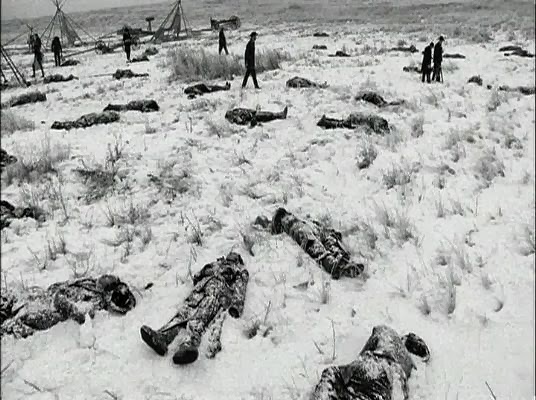
-You can’t really look at the first part of American history without being aware of what was stolen from the American Indians.
Wounded Knee Massacre
 
-The US was initially settled by The Pilgrims from England on the east coast of the country. They came to America for religious freedom where they could practice their faith without persecution of the threat of imprisonment or persecution. This of course only applied to the like-minded Christians. Things got out of hand with the Salem witch trials when some were put to death.
-Back then the US was mostly an agrarian country. As time went on landowners had more and more influence in local politics. The more land they controlled the richer they became.
-In 1776 The Declaration of Independence was introduced. In the preamble “all men are created equal” is mentioned. Many of the signers of this document were in fact slave owners which isn’t quite all men being equal. Most of the signers were also wealthy land owners. The American Indians were also not part of the “all men are created equal”.
-The US south was built on slavery. The US Civil War was partly but not entirely about slavery and the man who tried to abolish it, President Lincoln, was a Republican. Many of the Founding Fathers who signed The Declaration of Independence were slave owners including Washington and Jefferson.
American slavery.
-In the mid-1800s the industrial revolution started. More and more people flocked to the cities in search of work. By the 1890s by far most of the wealth in the US belonged to a small % of people.
-Wealth controlled both local and national politics. People’s general welfare was often the least thing most politicians were concerned with.
-Around 1900 progressive ideas started to come to the fore in the US. A number of unions were created to give workers some rights. Over the next 50 years or so there were a number of fierce battles between workers and strike breakers who were hired by the wealthy.
-In 1929 the stock market crashed and fortunes were lost. Out of control recklessness with goods and materials having false values and people investing without collateral were some of the reasons for the collapse. Poor farming methods based on endless extraction led to the Dust Bowl and millions of Americans were out of work.
 
-WW2 revived America’s fortunes and led to a number of years of prosperity. Manufacturing was a key part of the country’s economy and there was an abundance of decent paying blue collar jobs.
-For the past 30 years or so the control of the nation has shifted more and more to the very wealthy and Corporate America. Wage gains have in no way matched the increased cost of living for many in the middle class and more and more Americans are struggling.
So…What Have Progressive Ideas Done To Better American’s Lives?
Before offering up a list it should be noted that the very rich have always stood in the way of progress if it includes benefitting the middle class or poor.
The world does not stand still. There are things that have always worked and others that need some fixing or need to be replaced all together.
-Before there were unions it was common for people to work 10 hour days 6 days a week. Child labour including working in mines was the norm in parts of the country. There was little in the way of safety rules to protect the health of the workers.
Child labour.
-If it wasn’t for Teddy Roosevelt there wouldn’t be the number of national parks there are today including Yellowstone National Park. Big business would have mined the hell out of the parks if they had their way In the early 1900s the “progressive movement” was the most powerful influence in US politics. In 1904 318 trusts controlled about two fifths of the US economy. A number of monopolies including railroads were broken up by Teddy Roosevelt.
Teddy Roosevelt at Yellowstone.
-The Federal Meat Inspection Act came into being in 1906. It was the forerunner to the Food and Drug Administration which protected citizens from the marketing of unsafe products.
-In 1916 the Keating-Owen Child Labor Act came into being curtailing the exploitation of child labour.
-The Suffragette Movement pressured American politicians for the right for women to vote. It wasn’t accepted until 1920.
Women marching for the vote.
-In 1935 Social Security became part of the fabric of America. Up until then poor older people often spent the remainder of their years in “poor houses”. In the over 75 years since SS was introduced it has been a savior to millions of Americans in their final years.
An American poor house.
-In 1936 the Hoover Dam was completed. Funding for the project came from the federal government.
The Hoover Dam.
-In 1938 the statutory minimum wage was introduced in the US. Up until that time an employer could pay a worker as little as he cared to.
-The GI Bill of 1944 assisted over 2.2 million American vets returning from WW2. Among the benefits the vets received were college tuition along with living expenses, financial assistance in starting a small business, high school or vocational training, one year of unemployment compensation, and low-cost mortgages.
* To get an idea how much has changed in the US between the end of WW2 and now, consider the following. At today’s dollar value WW2 cost the US over 2 trillion dollars. There was also the added cost of the Marshall Plan in Europe and money owed from The Great Depression. The GI Bill lasted until 1956. It was in effect in both a Democratic presidency and a Republican presidency (Eisenhower).
 
-In 1964 The Civil Rights Act became law. It prohibited segregation in public places and terminated Jim Crow laws in the South. It also required integration of schools, eliminated unequal voter registration requirements, and prohibited employment discrimination.
 
-The Social Security Act of 1965 established Medicare and Medicaid in the United States. Medicare basically established healthcare coverage for seniors over the age of 65.
-The Voting Rights Act of 1965 secured the right of every American, particularly blacks in the South, to be allowed to vote. Poll Taxes, literacy tests, harassment and violence towards voters was outlawed.
-In 1970 The Occupational Safety and Health Act was passed. Basically it requires employers to provide a safe and healthy working environment.
-The Endangered Species Act of 1973 was passed to protect wildlife that was becoming extinct including the American bison, whooping cranes, and the bald eagle.
-The Family and Medical Leave Act of 1993 gave American workers the option of taking  unpaid time off from their jobs for serious illnesses, pregnancy, care for a new child, family turmoil caused by a family member being called for military duty, without the threat of losing their employment.
-In 2009 the Hate Crimes Act (the Mathew Shepard Act) was introduced. It put more teeth into prosecuting crimes based upon race, colour, sexual persuasion, or religion.
 
These are just some of the examples of “progressive” laws that were passed to benefit all Americans. It goes without saying that most of these laws were not favoured by the far right and often the very wealthy and corporate America.

What Are Progressives Typically for?
#1 The right for women to control their own bodies when it comes to their health.
 
#2 Most Progressives are anti-war unless it comes down to having to defend their country. Progressives also recognize that is mostly the poor in America who end up fighting in these wars and once they have been used for these purposes they are often discarded by the politicians who sent them off to war in the first place. Progressives don’t believe that the US should be the world’s unasked for policemen.

Anti-war march.

#3 Universal healthcare, not the water downed Obamacare. The same type of healthcare utilized in every other advanced nation in the world, not one run by a cartel with anti-trust exemption that can extract at will whatever they care to from a captured market place.
 #4 Limited political contributions from wealthy corporations and the very rich (casino owner Sheldon Adelson and the industrialist Koch brothers) that alter election outcomes by contributing millions to political campaigns. Democrats accept money also from corporate America and pretty well have to after the weighted in favour of the Republicans Supreme Court decision to accept corporations as being people too.
 

#5 A recognition that Global Warming isn’t just a vague opinion and that steps need to be made to address what this ongoing calamity will do to coming generations and the present one.

 
 #6 Financial reform. That laws be passed to prevent banks and Wall Street from taking high risks with people’s investments causing a meltdown of the world’s economy once again. That those who work for these companies and break laws be prosecuted.

 
#7 Environmental protection. That industry can not just do whatever it pleases in the name of profit without having any responsibility towards environmental damage. Like the oil industry and the unknown damage caused by fracking.


#8 Consumer protection. That products can not come to market without proving that they are safe for usage or consumption. That customers are not used as guinea pigs when it comes to the introduction of new drugs.

 
#9 Affordable higher education. Starting with the amount of interest that can be charged for student loans and a banning of private sector student loans with their usurious rates.  A banning of on-line schools that prey on ex service people and whose degrees have little value to perspective employers. An investment of federal and state taxes to lower the cost of a college education.
 
#10 A serious attempt at job creation including a national works program funded by the federal government rebuilding the US infrastructure. This would create millions of jobs and products would be supplied by the private sector.


#11 A severe cut to the Defence Department. Cutting their budget at least in half. Ending the waste of building fighter jets in 10 different states and the enormous amount of money spent with private contractors. The money saved could be spent on reducing the national debt, reducing the cost of higher education, and a number of other things benefitting almost all Americans.

 
#12 Increasing the minimum wage. The American people are not responsible for the fortunes made by fast food restaurants who make a good part of their earnings by paying their employees poverty wages. 10 years ago a Big Mac meal cost about $2.50. Today it is closer to $8.00. Nowhere in that $5.50 increase has a pay raise for workers been added.

#13 A total end to corporate subsidies. In the total history of mankind there has never been the amount of profit by one industry as there is today by the oil companies. Yet they are still substatized.

 
#14 A closing of corporate tax loopholes. This is a total loss of tax revenues. Many corporations pay zero in taxes but get to use public roads and bridges for free when they are paid for by the taxpayers.


#15 An uncoupling of monopolies. Once corporations have formed a monopoly they can work together in collusion to demand whatever price they want for their products and their captive market has no options. Monopolies are not about free markets and competition.

 
#16 Removing religion from politics. If churches want to get involved in politics they should be taxed.


#17 Making voter suppression a criminal act. Oh wait....it actually is a criminal act but nobody is ever charged.


#18 When corporations refuse to pay US taxes and ship their cash to offshore accounts they should be made to pay an import charge when their products come into the US.

 
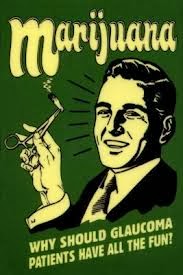
#19 The legalization of marijuana. Would save billions on wasted police time and the incarceration of people who shouldn’t be in prison
 
These are just some of the Progressive ideas. Societies are made up of all people. Some have to deal with poverty. Some have to deal with health problems. Even the bible which is the basis of Christian values talks about empathy for one another. A society that ignores the majority of its population and its welfare is doomed. What is so wrong about wanting better lives for one’s fellow citizens?

Progressive ideas haven’t always worked. Prohibition was a stupid idea. Unions got out of hand at times with gangsters sometimes in control and there were times that too much was given to union members in the way of benefits. In my opinion Michael Moore was a little sloppy with some of his facts in his movies. Nothing is always perfect!

A List Of Some Of the More Notable American Progressives in US History.
Jane Adams 1860-1952… one of the founders of the NAACP.
Louis Brandeis 1856-1941… fought the railroad monopolies.
W.E. Dubois 1868-1963…civil rights activist.

W.E. Dubois
 Eugene Debs 1855-1926…organized one of US’s first labour unions, The American Railway Union.

 
Teddy Roosevelt…as US president created a number of national parks. Introduced anti-trust laws.
Florence Kelley 1859-1932…organized against sweatshops and was an advocate for children’s rights.
Upton Sinclair 1878-1968…changed California politics for decades.
Charlotte Perkins Gilman 1860-1935…argued for equality between the sexes.
Roger Baldwin 1884-1981…founded the American Civil Liberties Union.
John L. Lewis 1880-1969…was president of the United Mine Workers from 1920-1960. In 1948 he won an historic agreement with the mining companies establishing medical and pension benefits for miners.
Frankin Delano Roosevelt 1882-1945…served almost 4 full terms as US president starting in The Great Depression and ending near the end of WW2. He is often picked as the most revered president in American history.  He instituted the New Deal, a variety of programs including government jobs for the unemployed, regulation of Wall Street, the banks, and transportation. He also introduced Social Security. At its peak the WPA (The Worker’s Progress Administration) employed over 2 million formerly unemployed Americans.
Eleanor Roosevelt 1884-1962…spent her years as FDR’s wife during his presidency and after he died being involved with causes like assistance for the poor, women’s rights, and civil rights. Stood up to the Daughters of the American Revolution over racial exclusion.


Norman Thomas 1884-1968…early critic of the Viet Nam War. Was one of the founders of the American Civil Liberties Union.
Other notable Progressives  from the 20th century include Paul Robeson, John Dewey, Supreme Court Justices Earl Warren and Thurgood Marshall, Pete Seeger and Woody Guthrie, Betty Friedan and Gloria Steinem, I.F. Stone, Harry Hay, the Rev. Martin Luther King, Rachel Carson, John Kenneth Galbraith, Michael Harrington, Ralph Nader, Bill Moyers, Tom Hayden, and Saul Alinsky.
You can add the many progressives that stood up against the wars in Viet Nam, Iraq, and Afghanistan.
Progressivism is hardly dead in America. Most of things Progressives stand for are the same things that most Americans want. Progressives are not radical. They are for common sense.

If you are a TV watcher you can find a number of Progressives on MSNBC including Chris Hayes, Rachel Maddow, Ed Shultz, Rev. Al Sharpton, Lawrence O’Donnell, and Alex Wagner. Chris Mathews is not a Progressive.
Rachel Maddow
Although they might not label themselves totally as Progressives you can often see comedians like Jon Stewart, Stephen Colbert, and Bill Maher railing at the absurdities of the American far right.

 
Matt Taibbi, a writer for Rolling Stone, is an excellent source for a clear look at how corporate America and the far right including far right Christians repeatedly try to get one over on the American public.

 
Bernie Sanders, the Vermont Senator, is probably the most outspoken Progressive in American politics today and he sits as an independent.  

Polls Show That Progressive Political Ideas Are Gaining More And More Favour In The US.
-80% of Americans believe the federal government investments in education, infrastructure, and science are necessary to ensure America’s long term economic growth.
-66% of Americans believe that the government has a responsibility to provide financial support for the poor, the sick, and the elderly.
-75% of Americans believe that government regulations are necessary to keep businesses in check and protect the consumers and workers.
-76% of Americans believe that the US should move from a reliance on oil and gas to renewable energy like wind and solar.
-Over 65% of Americans believe that healthcare should be more affordable.
Big Government?
The right in the US is constantly railing against the size of the federal government and its inability to ever do anything right.
First of all this is an interesting claim since most of the expansion of the US federal government has come about under Republican presidents including Ronald Reagan. Homeland Security has over 200,000 employees and the department was created following 9/11.
The US federal government employs about 2.8 million people (about 1 out of every 100 American citizens). There are about 320 million American citizens. That’s a lot of people. Actually about 1 million Americans are federal employees (1 out every 300 Americans). The rest are military personnel.
-Republicans like to claim that the federal government never does anything right. This of course is a big lie starting with NASA and putting a man on the moon. SS and Medicare have benefited millions of elderly Americans. Programs for the poor have saved countless lives. Big projects like the American highway system and the Hoover Dam have assisted America’s prosperity.
-The federal government has protected people’s freedoms including their religious choices.
-The reason there wasn’t a major run on banks in 2008 was because of federal deposit insurance.
-America’s air and water are considerably more cleaner today than they were in the 1960s due to the federal government’s legislation.
-The National Weather Service has improved hurricane and tornado warnings by 50% in the past 15 years.
-Food and drug safety programs have protected Americans from dangerous products for years.
-Federal funds account for 80% of science research in the US. Many beneficial products have come about by federal research including the internet. Although the research money comes from taxpayers the products are all made by the private sector.

The American Right’s Hypocrisy When It Comes To The Federal Government.
-Republicans in general hate entitlement programs. They never ever mention that programs like Medicaid and Medicare both spend billions of dollars acquiring goods and materials from the private sector. Ask one of these suppliers if they would like to give up their sales to the federal government.
-The US defense budget is about 1/5 of the annual budget. Billions are spent with private contractors at often ridiculous prices. Often without open bids. Ask the contractors if they would like to forgo this income.
-Republicans and Democrats will take any government subsidy they can get including being paid not to grow something.
-Paul Ryan, the architect of the farcical proposed Republican budget that included more tax breaks for the rich, the voucherized Medicare, and the destruction of Obamcare, has spent most of his adult life being paid by the federal government. His working history is a mere few years for the family business. Where you really shake your head is that Ryan put himself through college using his dead father’s social security survivor benefits.
-The avoidance of paying taxes may be legal but it still undermines the federal government in tax revenue. Mitt Romney has worked this to perfection with millions of his money in off-shore accounts.

Summary
America is the richest country on the planet. There is plenty for everyone. There is no reason 20% of the population should live in poverty or that many who still manage to barely be middle class are forced to be affected by one unneeded crisis after another including the cost of healthcare.

 
Making sure the rich get richer should not be most people’s concerns. What is enough for the very wealthy and corporate America? Should everyone else suffer because of the appetite for greed by a few? Just how much is enough, a billion? You could buy anything you could ever extravagantly expensive that you would want in a lifetime and still have money left over if you had a billion dollars…. a 30 million dollar house, a 10 million dollar vacation home, money for tuition at Harvard or Yale, servants and drivers, expensive cars. You name it.
Should Americans be concerned about the welfare of Wal-Mart heirs, the Walton family, who had no part in building the company but are worth 25 billion dollars each?
Or should they be concerned about their neighbours and their welfare? Should they care about the poor? Should they care about their children’s future?
Republicans love to push the idea that anyone can make it in the US through hard work. Just what is hard work anyway? Standing on your feet all day at Wal-Mart or digging ditches or making a real estate deal in the clubhouse on a golf course?
Can your daddy give you money to buy your first hotel like Donald Trump’s dad did?  Do you think you might get away with stiffing your contractors when your business decisions prove faulty?
Are you fooled by Republicans that will tell you that the rich are important because they are the job creators or do you know the truth which is that the rich and corporate America only hire people because they need them to become richer and the reality is that small and medium size businesses create the most new jobs.
Fuck the rich! It is long past the time caring about what they think because whatever it is they are thinking it isn’t about others (you and your family) having a better life.

PS

I am a Canadian. I live in a country with universal healthcare. Our current government is run by Stephen Harper and the Conservative Party. The Conservatives were elected with about 40% of the popular vote. Canada is not a conservative country. A few years ago there was contest to determine who Canadians thought was the greatest Canadian ever. Of course there were a number of votes for professional hockey players because we Canadians love our hockey. The person chosen as the greatest Canadian ever was a man named Tommy Douglas. He was from the province of Saskatchewan. He was an ordained minister in the Calvary Baptist Church. After being in politics in Saskatchewan for some years Douglas became the leader of the national political party, the CCF, which was a left of center group. The CCF later became the New Democratic Party. Douglas never came close to being Canada’s prime minister. His claim to fame was that he introduced universal healthcare in his home province of Saskatchewan. After it became a success the national Liberal Party Of Canada introduced it as part of the fabric of Canada.

 
Stephen Harper has done a number of nutty things and if an election were held today he would most likely be out of office. Unlike his right wing cousins to the south in the US, Harper would never in his wildest dreams attempt to abolish universal healthcare.

Tommy Douglas died in 1986 at the age of 81.

PS #2.....

A few years ago we were in Arles, France where there is a Roman arena. Our tour guide told us that the common thought about battles between gladiators or men fighting animals was that it was for the entertainment of those in power and the very wealthy.

Our tour guide pointed out that this wasn't entirely true. In fact many of the peasants attended the arena battles. For most of the next week they would talk in excitement of what they had seen and what they would see the next week. It was a distraction for them and made them forget somewhat about the deplorable conditions they lived in and their futile plight in life.

The same thing is happening today in the US where people are divided and instead of being concerned about their own welfare and that of their neighbours, many choose to concentrate on divisive issues like race, religion, homosexuality, abortion, their interpretation of socialism and patriotism, and pay little attention to the fact that society including the government favours the very wealthy to the detriment of most Americans.